

MIG Update – November 9, 2026
Why Lack of Early Medical Attention Is Not Determinative in MIG Escape
In this week’s edition, the Tribunal considers the Respondent’s reliance on the absence of emergency services at the scene, no initial hospital visits, minimal immediate missed work, and a lack of early contemporaneous complaints to challenge whether the Applicant’s ongoing pain and psychological sequelae warranted removal from the MIG.
With over 2,600 LAT MIG decisions decided to date, inHEALTH’s LAT Compendium is the industry standard. We do the heavy digging so you don’t have to, curating nuanced summaries that pinpoint exactly what the ruling turns on. It’s the definitive research that supports your strategy demands.
Virtual Training – Upcoming Dates!

Secure your seat for inHEALTH’s 2026 upcoming Virtual Training session!
Advanced LAT Search Strategies and Best Practices
Our Search Strategy Best Practices offers a helpful framework for structuring these multi-layered queries – book your one on one orientation or register for our next webinar on December 1 at 1 PM to learn how & get your CPD hours.
- Date & Time: Tuesday, December 1, 2026, at 1:00 PM EST
- What We’ll Cover: 4-step search best practices, database structure optimizations, and high-value workflow shortcuts (including Live Chat and Outcome Analysis Reports).
- CPD Credit*: Qualifies for 1 Substantive CPD Hour.
*Eligible Participants receive 9 Substantive – CPD hours upon course completion
Course details & register here
Factor – Early Absence of Treatment
In Farjo v. Aviva, Firas Farjo was involved in an automobile accident on June 8, 2023, and sought entitlement to four treatment plans for physiotherapy, psychological treatment, and a psychological assessment totaling $8,800.03. He sought removal from the MIG based on a pre-existing condition and a non-minor psychological/chronic pain impairment.
The Applicant’s Position
Farjo highlighted that persistent pain severely restricted his functional capacity, forcing him to reduce his working hours from full-time to part-time status. He further argued that pre-existing conditions, combined with an October 2023 s. 25 psychological assessment report by Dr. Brunshaw diagnosing him with features of Adjustment Disorder with Anxiety and Specific Phobia, alongside consistent treating recommendations from his family doctor (Dr. Arshat), established that ongoing physiotherapy and psychological treatment were reasonable, necessary, and precluded his recovery within the MIG limits.
The Respondent’s Position
Aviva maintained that Farjo’s physical injuries were strictly minor strains and sprains, relying on the January 23, 2024 s. 44 IE reports of Dr. Chaudhry (GP) and Dr. Ratti (Psychologist) to challenge the severity and causation of the claimed impairments. To support its position, Aviva emphasized the absence of early objective indicators noting there was no police or ambulance involvement at the scene, no initial emergency room visit, and a lack of contemporaneous complaints regarding the disputed injuries in the months immediately following the accident. Furthermore, Aviva argued that Farjo’s quick return to work (missing only a few days post-accident) his independence with activities of daily living, and his failure to fill more than one prescription for Cipralex demonstrated that his pain levels were manageable and did not warrant removal from the MIG.
The Tribunal found:
- The clinical notes and records evidenced persistent, multi-site musculoskeletal pain that exceeded the expected recovery period for routine sprains or strains. The presence of ongoing functional deficits tied to this pain justified removal from the MIG.
- Farjo’s inability to maintain pre-accident work hours provided compelling evidence of chronic pain-driven functional impairment. Although Aviva emphasized that he only missed a few days of work immediately following the accident, it failed to address his subsequent reduction to part-time hours, a functional limitation documented by both his family doctor and the psychological IE assessor.
- Non-medical factors (e.g., absence of emergency services, minimal initial days missed from work) cannot override consistent treating medical evidence establishing ongoing pain.
- Aviva’s reliance on the absence of an ambulance or hospital visit at the scene, while these observations hold minor context, they do not constitute substantive medical evidence. Primary weight was instead placed on the treating family physician’s notes confirming that physical therapies provided tangible pain relief and functional improvement.
- Incomplete prescription usage does not, on its own, prove that pain is manageable or minor, rejecting Aviva’s argument that filling only one prescription for Cipralex indicated manageable pain levels, choosing instead to rely on the broader medical record demonstrating sustained pain and functional limitations in the workplace.
- All the Treatment Plans in dispute were found reasonable and necessary and supported by pain relief corroborated by the family doctor records.
Get Your Stats Report!
inHEALTH’s Statistical Reports provide insights and analysis on the outcomes of Licence Appeal Tribunal (LAT) and court decisions.
Customize success rate reports on any variable relating to disputed AB claims captured in LAT and court decisions!
Decisions By Top 10 Insurers
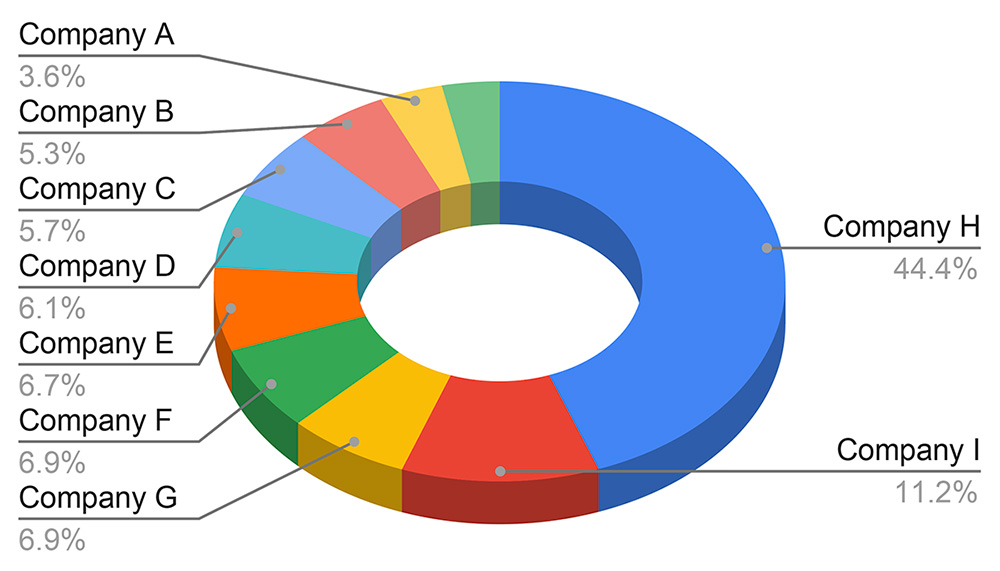
*Sample Chart
Statistical Report fees are based on the complexity of your data request
Learn More & Get a Quote Here >
Need a briefing on recent MIG trends or a case law training session for your team? We can help.
Contact us today or reach out on live chat to set up a tailored session or request a stat report and summary of recent MIG rulings.
