

MIG Update – April 13, 2026
Recurring Pain is Insufficient for MIG Removal
This week, we review a MIG hold case where the Applicant advanced ongoing pain complaints in addition to a psychological injury. The Tribunal considered whether the duration of persistent pain qualifies as a chronic condition accompanied by functional impairment, versus recurring discomfort from the pain.
Virtual Training – Upcoming Sessions

Secure your seat for inHEALTH’s 2026 upcoming Virtual Training sessions!
- SABS Expedited: April 20-24, 2026
- SABS Expedited: May 25-29, 2026
*Eligible Participants receive 9 Substantive – CPD hours upon course completion
Course details & register here +
In Laptiste v. The Dominion of Canada General Insurance Company (24-003325), Michael Laptiste was involved in an accident on March 30, 2023, and sought entitlement to two Treatment Plans for chiropractic services and a psychological assessment, totalling $6,208.83. He sought removal from the MIG based on a pre-existing condition, a psychological impairment, and chronic pain.
He submitted that chronic pain is a condition persisting for three to six months and does not require a formal diagnosis for MIG removal. He relied on the CNRs of family physician Dr. Beharry who documented persistent pain complaints for 18 months after the accident and the March 2023 psychological pre-screening report of psychologist Dr. Gabidulina. He further argued that his pain required medication prescriptions and was documented during the September 2024 IE conducted by physiatrist Dr. Oshidari.
The Dominion relied on the CNRs of Dr. Beharry, which made no mention of psychological impairment or a specialist referral. Furthermore, the October 2024 IE report from psychologist Dr. Saunders opined that Laptiste did not sustain an accident-related psychological impairment. They also relied on the September 2024 examination and IE report of physiatrist Dr. Oshidari; in that assessment, Laptiste described being able to complete daily activities independently and noted that his pain was manageable after two months. Dr. Oshidari documented a full and pain-free range of motion in the neck, shoulders, and hips. While the range of motion in the lower back was measured at 70% to 80% of normal, it was found to remain within a functional range.
Get Your Stats Report!
inHEALTH’s Statistical Reports provide insights and analysis on the outcomes of Licence Appeal Tribunal (LAT) and court decisions.
Customize success rate reports on any variable relating to disputed AB claims captured in LAT and court decisions!
Decisions By Top 10 Insurers
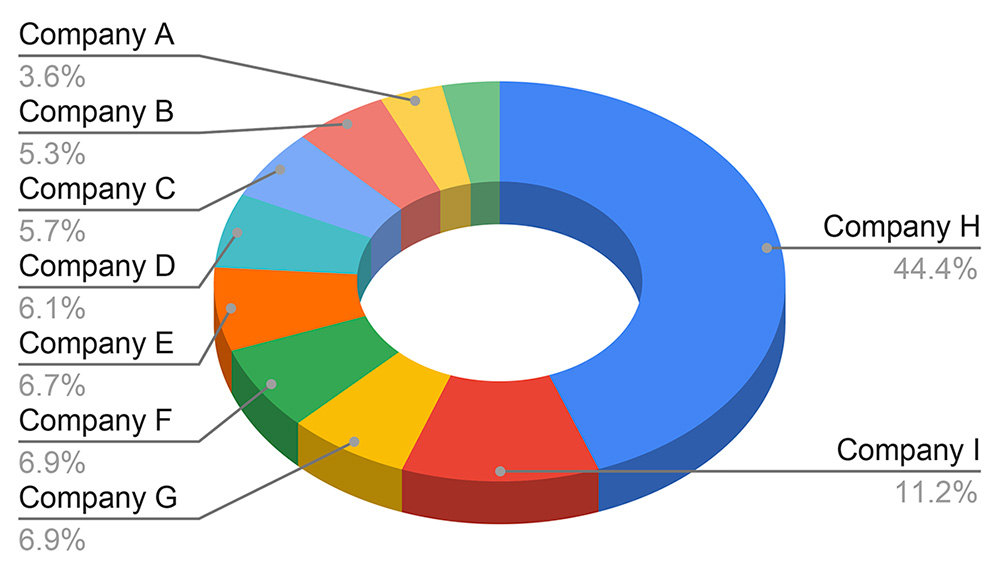
*Sample Chart
Statistical Report fees are based on the complexity of your data request
Learn More & Get a Quote Here >
The Tribunal found:
-
- Although Laptiste reported his sleep issues and anxiety, it preferred the IE report of Dr. Saunders’ noting that psychologist Dr. Gabidulina’s psychological pre-screening report was “provisional” and lacked corroboration from psychometric testing or his family doctor’s records.
- The family doctors’ records did document that Laptiste experienced accident-related pain for 18 months post-accident between April 2023 and August 2024 and did prescribe medication; it found little evidence that this pain was “severe or debilitating”.
- Dr. Beharry observed pain associated with range of motion; he did not mention that Laptiste’s range of motion was actually restricted by pain.
- “Similarly, the results of Dr. Oshidari’s examination do not support disability arising from the applicant’s pain. Dr. Oshidari’s report, dated November 21, 2024, documented that the range of motion in the applicant’s cervical spine (i.e. neck) was full and pain-free when he was examined in September 2024. Same for the applicant’s shoulders and hips despite complaints of back pain when the latter was tested. While the applicant’s range of motion in his lumbosacral spine (i.e. low back) was measured at 80 per cent of normal in flexion and rotation, and 70 per cent of normal in extension and lateral bending, I find Dr. Oshidari determined this still presented within a functional range of motion, which, in my view, falls short of establishing a severe, debilitating condition.”
- Ultimately, unless the pain creates a measurable loss of function, it remains categorized as a minor injury sequelae, regardless of how long the symptoms persist.
Need a briefing on recent MIG trends or a case law training session for your team? We can help.
Contact us today or reach out on live chat to set up a tailored session or request a stat report and summary of recent MIG rulings.
inHEALTH Keeps you LAT inFORMED With Access To:
1. LAT Compendium Database – a relational database of LAT and Divisional Court Decisions equipped with multiple search options, Smart Filters, and concise case summaries
2. Notifications: – weekly LAT inFORMER delivered to your inbox Wednesdays; Newly Added Decisions on Fridays and Breaking News as and when it happens
3. Research Support: – inHEALTH’s Live Chat Experts for guided searches and technical inquiries.
Sign up for a 14 day free trial below to experience the service and see how it can help guide your decision making.