

Volume. 10 Issue. 31 – November 4, 2026
In The Spotlight
This week’s matter involves an Applicant whom both parties agreed suffered from marked impairments in both Activities of Daily Living (ADL) and Adaptation. The Tribunal was tasked with performing a deep dive into the Applicant’s social functioning to determine whether the threshold for a catastrophic (CAT) designation under Criterion 8 was met.
Advanced LAT Search Strategies and Best Practices
Our Search Strategy Best Practices offers a helpful framework for structuring these multi-layered queries – book your one on one orientation or register for our next webinar on December 1 at 1 PM to learn how & get your CPD hours.
Session Details:
- Date & Time: Tuesday, December 1, 2026, at 1:00 PM EST
- What We’ll Cover: 4-step search best practices, database structure optimizations, and high-value workflow shortcuts (including Live Chat and Outcome Analysis Reports).
- CPD Credit: Qualifies for 1 Substantive CPD Hour.
Register for the Upcoming Webinar
Social Functioning Determinative in CAT Finding
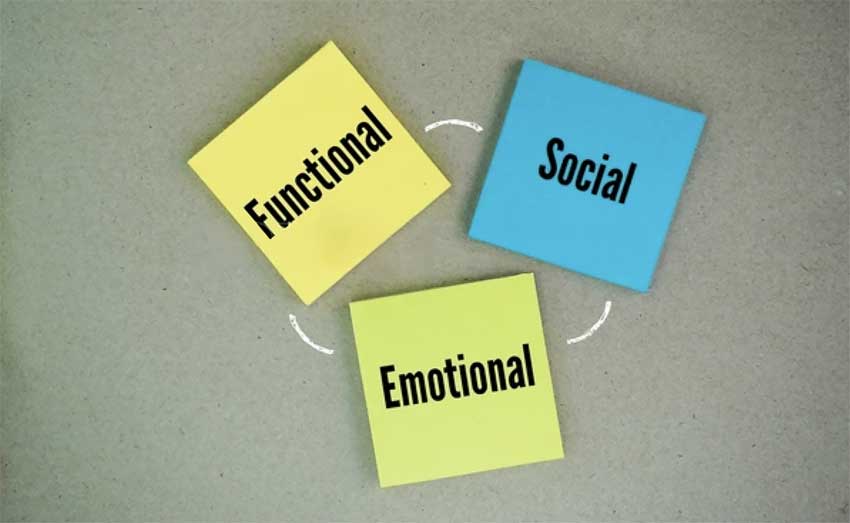
Not Socially Functional
Following an October 2022 MVA, assessors for both parties agreed under the Criterion 8 CAT evaluation that the Applicant Akilan, was markedly impaired in Activities of Daily Living (ADL) and Adaptation, and moderately impaired in Concentration, Persistence, and Pace (CPP). At issue in 25-006716 v. Unifund was whether her impairment in the domain of social functioning was moderate or marked.
Applicant’s Case
Akilan submitted that her social functioning she has exhibited since the accident and particularly after a second surgery on her accident-related foot injury in February 2025 that failed to resolve gait-related issues was not “useful” as she cannot be independent in her community, engage with her children, maintain her relationships with friends and extended family members, nor initiate new relationships.
Jurisprudence Relied Upon
Akilan relied on a number of precedents, including Krupnikov v The Personal Insurance Company, to show that social media posts are not a reliable indicator of a person’s day-to-day lifestyle, Armstrong v Intact Insurance Company, a cautionary tale about assessors oversimplifying function and Mayers v Wawanesa Mutual Insurance Company, to show that attendance at community activities does not necessarily preclude marked impairment of social functioning. Akilan also relied on Gordan v Certas Direct, to show that limited engagement during community outings can support marked impairment of social functioning, as well as Dyer v Economical Insurance Company, to show that clinical presentation in a controlled and structured assessment environment is not necessarily a reliable indicator of real-world function.
Respondent’s Case
Unifund contended that Akilan’s own reports of her social function were hindered by an absence of corroborating information, and that the evidence in this case consistently shows that she has been able to participate in “some socialization” since the accident (i.e., a family wedding, a “saree” party, her sons’ birthday and a citizenship ceremony) as well as maintained “some” social relationships (i.e., her husband, children, brother, and several persons who accompany her in the community). Unifund also argued that the evidence shows that she interacts appropriately with others, which is inconsistent with marked impairment.
Virtual Training – Upcoming Dates!

Secure your seat for inHEALTH’s 2026 upcoming Virtual Training session!
Advanced LAT Search Strategies and Best Practices
Our Search Strategy Best Practices offers a helpful framework for structuring these multi-layered queries – book your one on one orientation or register for our next webinar on December 1 at 1 PM to learn how & get your CPD hours.
- Date & Time: Tuesday, December 1, 2026, at 1:00 PM EST
- What We’ll Cover: 4-step search best practices, database structure optimizations, and high-value workflow shortcuts (including Live Chat and Outcome Analysis Reports).
- CPD Credit*: Qualifies for 1 Substantive CPD Hour.
*Eligible Participants receive 9 Substantive – CPD hours upon course completion
Course details & register here
Marked Impairment Confirmed
The Tribunal concluded that “the bulk of the evidence pertaining to the applicant’s symptomology and resulting limitations are consistent with marked impairment, in that they significantly impede all useful function. In my view, it is the applicant’s avoidance of interpersonal relationships, social isolation, and fear of strangers that present with a degree of interference that meets the threshold for catastrophic impairment.” It was determined that Akilan’s testimony was corroborated by her husband and her sister-in-law. The Tribunal disagreed with Unifund’s position to the effect that Akilan’s testimony regarding her social functioning merited less weight given that corroborating information to support her self-reports was absent from the documentary record.
Unifund further argued that the impartiality of her husband and her sister-in-law “diminishes the probative value of their testimony. I find this is a bald assertion. The respondent did not point to aspects of its cross-examination that led me to conclude their testimony was tainted by impartiality, and I see no reason to doubt the evidence of these witnesses as I find their evidence was consistent with the bulk of the medical record. In my view, the applicant and her witnesses were subjected to robust cross examination that tested their evidence, and the impartiality alleged by the respondent was not demonstrated.”
Aside from the lack of corroborating evidence, the Tribunal noted that the main thrust of Unifund’s position was directed at the absence of altercations in social interactions, something raised repeatedly on numerous occasions throughout the hearing. However, the Tribunal noted that most examples led in Unifund’s closings occurred in a structured clinical environment. Akilan’s expert’s “testimony persuasively distinguished these question-and-answer types of clinical interactions from actual socialization that occurs in a relational or conversational context.” Further, the Tribunal confirmed that altercations are just one aspect of social functioning identified by the Guides, in addition to social isolation and avoidance of interpersonal relationships. The Tribunal found that Akilan’s “disengagement from her immediate family members betrays an avoidance of interpersonal relationships and social isolation that is persuasive evidence of marked impairment.”
The Tribunal further concluded that “the infrequency of social engagement and symptomatic regression of isolation and avoiding relationships post-surgery is more indicative of marked impairment than moderate impairment considering the busy social agenda that was independently pursued by the applicant pre-accident. Simply put, there is a dearth of social functioning throughout the post-accident period. And that which did occur falls far short of being useful when contrasted against pre-accident levels of engagement and contribution that went well beyond mere transactional gestures. This underscores a degree of impairment in social functioning that I find meets the threshold of marked as defined by the Guides because there is scant evidence that this function is, in fact, useful.”
Experts
The Tribunal found that the observation of Unifund’s OT were persuasive indicators of marked impairment. The OT confirmed that Akilan’s “current functioning is marked by noteworthy challenges in adaptation and coping with stress, as highlighted by her reliance on others for assistance, avoidance of certain activities, and cognitive and emotional difficulties. These issues collectively impact her ability to maintain daily routines, manage responsibilities, and engage in social and recreational activities, underscoring the need for continued support and intervention to improve her overall quality of life.”
The Tribunal found that Dr. Hasan on behalf of Akilan was persuasive, referencing his comments that Akilan’s “previously hopeful perspective on her future has been significantly diminished. She expresses distress over her dependence on others, constant focus on pain and exhaustion, and what she perceives as a steady decline in both her mental and physical health.” Further, Dr. Hasan’s testimony “further identified the applicant’s need for accompaniment as the main distinguishing factor between his opinion and that of Dr. Chandrasena. Dr. Hasan emphasized in his report that the applicant’s social activities will be compromised (i.e., not useful) so long as she stays in her home and does not venture into the community unaccompanied.”
The Tribunal conceded that Dr. Hasan “glossed over treatment records that noted improvement and does not read every word of record,” however disagreed that this undermined the reliability and objectivity of Dr. Hasan’s report. This is because it was based upon a finding that “his conclusions are supported by the bulk of the evidence in this case, and that his analysis is grounded in the record and observable fact.” In contrast, the Tribunal found that Unifund’s expert, Dr. Chandrasena’s “analysis is superficial and unpersuasive. His report offered an analysis that places weight on the applicant’s progress in occupational and psychological therapy to justify a moderate impairment rating in social functioning.”
The Tribunal found that Dr. Chandrasena’s analysis was “devoid of meaningful consideration as to the usefulness of the applicant’s post-accident social functioning as indicated by the Guides. Dr. Chandrasena simply concludes that because the applicant has some interactions with others—and improvements noted in occupational therapy and psychological reports—that this qualifies as a moderate impairment. But this analysis does not contemplate whether the functioning Dr. Chandrasena refers to is useful despite him recognizing that the applicant is reliant on other people, does not want to worry, and does not want to be involved in social situations.”
The Tribunal also assigned less weight to Dr. Chandrasena’s evidence “because he appeared to be confused at times as to what informed his determination of catastrophic impairment. For example, he mentioned during his direct examination that he “read somewhere” that the applicant continues to “at least partially” engage in social media (albeit “not too actively”). However, the applicant’s social media activity is not indicated in the analysis he prepared for his report and his testimony in this regard struck me as somewhat arbitrary. When pressed about his social media observations during cross examination, he acknowledged that “he could be mistaken” and wished to “take [his testimony] back as nothing hinges on [social media activity] because [the applicant] is active in many other things.”
The Tribunal further noted that “the aspects of Dr. Chandrasena’s report I was pointed to offer scant analysis of the degree of improvement—and what specific aspects of the occupational therapy and psychological reports he relies on—to inform his analysis. This too diminished the weight of his opinion.”
Taking all of the evidence into consideration, the Tribunal confirmed that Akilan sustained a marked impairment in social functioning as a direct result of the accident, therefore satisfying the requirement under Criterion 8 of three Class 4 Marked impairments, resulting in a CAT designation.
Get Your Stats Report!
inHEALTH’s Statistical Reports provide insights and analysis on the outcomes of Licence Appeal Tribunal (LAT) and court decisions.
Customize success rate reports on any variable relating to disputed AB claims captured in LAT and court decisions!
Decisions By Top 10 Insurers
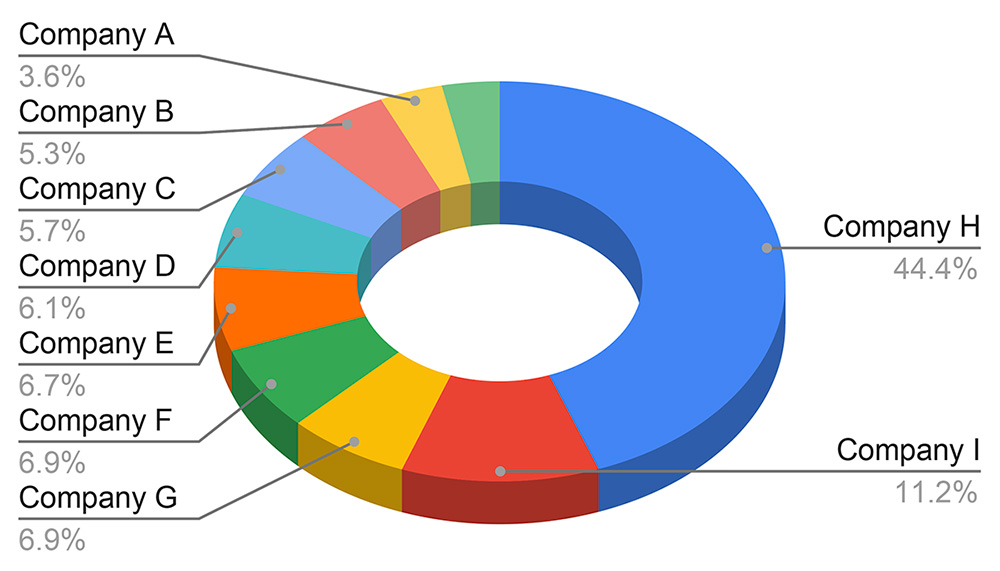
*Sample Chart
Statistical Report fees are based on the complexity of your data request
Learn More & Get a Quote Here >
