

MIG Update – February 16, 2026
40% Penalty for “Waiting” on IE’s
This week, we examine a MIG-escape case wherein the Tribunal considered the Applicant’s claim for a special award advanced on the basis that the insurer withheld benefits while awaiting further IEs. The ruling turned on the Tribunal’s interpretation of “stubborn and unyielding” behavior. The Tribunal emphasized that an insurer has a duty to review the entirety of the medical file. Ultimately, the decision confirms that an insurer cannot simply “wait” for a specific IE report if the existing medical evidence already provides sufficient grounds to remove the Applicant from the MIG.
Virtual Training – Upcoming Sessions

Secure your seat for inHEALTH’s 2026 upcoming Virtual Training sessions!
- SABS Expedited: April 20-24, 2026
- SABS Expedited: May 25-29, 2026
*Eligible Participants receive 9 Substantive – CPD hours upon course completion
Course details & register here +
In Kwakye v. Aviva General Insurance (23-008356), Kofi Kwakye was a pedestrian involved in an accident on November 8, 2022, and sought entitlement to ACB’s, three Treatment Plans for pharmacotherapy services, an OT assessment, and an optometric assessment, totalling $4,450.00, ACBs of $3,231.55 per month and a Special Award.
In May 2024 Aviva removed him from the MIG based on the report of psychologist Dr. Bodenstein, who diagnosed accident-related psychological impairments. At that time it approved some of the previous denied Treatment Plans.This review centres on the claim for the special award.
Kwakye asserted that Aviva unreasonably maintained his MIG status despite medical evidence to the contrary. He contended that the resulting 18-month delay in accessing treatment, such as physiotherapy, caused his psychological condition to deteriorate and prolonged his suffering. To support his claim, he relied on adjuster log notes and correspondence showing that Aviva ignored relevant records while awaiting favorable IE assessments.
Aviva maintained that their conduct did not warrant an award. They argued that their decision to keep Kwayke in the MIG was consistent with various clinical notes from the family doctor and IE assessors Drs. Nesterenko and Rusen who had initially diagnosed soft-tissue injuries. They further contended that the Kwayke’s complaints were related to pre-existing, age-related arthritic and degenerative changes rather than the accident itself.
Get Your Stats Report!
inHEALTH’s Statistical Reports provide insights and analysis on the outcomes of Licence Appeal Tribunal (LAT) and court decisions.
Customize success rate reports on any variable relating to disputed AB claims captured in LAT and court decisions!
Decisions By Top 10 Insurers
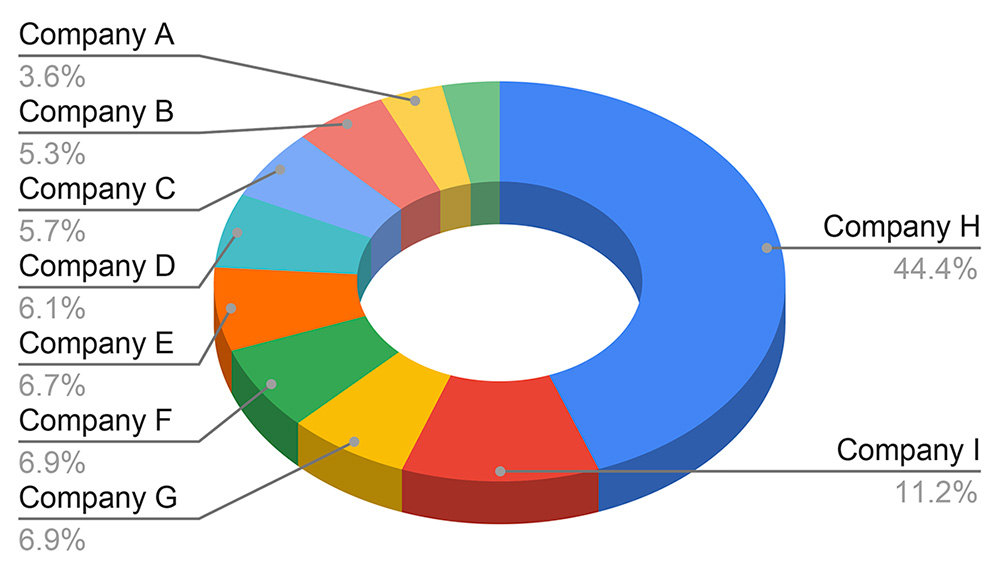
*Sample Chart
Statistical Report fees are based on the complexity of your data request
Learn More & Get a Quote Here >
The Tribunal found:
-
- Aviva’s conduct in maintaining the MIG position until May 2024 was “stubborn, unyielding, and unreasonable”.
- Aviva had constructive knowledge of a concussion and should have accepted the diagnosis earlier. This was documented in the Disability Certificate from the family doctor, Dr. Quansah, the reports of Ms. Johnston , and the hospital records. The diagnosis was further supported by Kwakye’s consistent reports of hitting his head on the pavement and his ongoing symptoms of headaches, dizziness, and blurred vision reported to both his GP and various assessors.
- Crucially, by June 2023, Aviva’s own IE assessor Dr. Nesterenko found that the accident exacerbated degenerative changes and delayed healing. Aviva should have removed the Applicant from the MIG at that point rather than waiting for additional MRIs to confirm the etiology.
- The adjuster did not act in good faith by seeking additional reasons to maintain the MIG status instead of providing the “benefit of the doubt” based on available evidence.
- In determining the quantum of the award it applied factors routinely considered, specifically it found Aviva fully blameworthy as a sophisticated party that possessed medical records supporting MIG removal.
- Kwayke was particularly vulnerable because he was 67 years old, had limited financial means as a former factory worker on IRBs, and was unable to return to work. The 16-month delay in MIG removal prevented him from receiving necessary treatment and caused his psychological condition to deteriorate.
- A 40% award was appropriate based on the $8,683.01 total, which included $7,983.01 for the Treatment Plans delayed by the MIG position and the $700.00 for the unreasonable denial of the optometric assessment. The maximum amount of 50% was not awarded because Aviva reconsidered its denials once the MIG was removed.
Need a briefing on recent MIG trends or a case law training session for your team? We can help.
Contact us today or reach out on live chat to set up a tailored session or request a stat report and summary of recent MIG rulings.
- Aviva’s conduct in maintaining the MIG position until May 2024 was “stubborn, unyielding, and unreasonable”.
inHEALTH Keeps you LAT inFORMED With Access To:
1. LAT Compendium Database – a relational database of LAT and Divisional Court Decisions equipped with multiple search options, Smart Filters, and concise case summaries
2. Notifications: – weekly LAT inFORMER delivered to your inbox Wednesdays; Newly Added Decisions on Fridays and Breaking News as and when it happens
3. Research Support: – inHEALTH’s Live Chat Experts for guided searches and technical inquiries.
Sign up for a 14 day free trial below to experience the service and see how it can help guide your decision making.