

MIG Update – December 1, 2025
When Chronic Pain Isn’t Enough
The Tribunal continues to hold that chronic pain, on its own, does not remove a claimant from the MIG without clear evidence of ongoing functional impairment, a chronic pain diagnosis is insufficient to establish a non-minor injury. This week’s case review highlights these principles, illustrating how arguments and case precedents can fall short when the evidentiary record does not substantiate a chronic pain escape.
Virtual Training – *NEW* Upcoming Fall Sessions

Secure your seat for inHEALTH’s 2025 upcoming Virtual Training sessions!
- SABS Expedited: December 8-12, 2025
*Eligible Participants receive 9 Substantive – CPD hours upon course completion
Course details & register here +
In Phillips v. Aviva Insurance Company of Canada (24-003308), Stephen Phillips was involved in an accident on December 12, 2021 and sought entitlement to two Treatment Plans for chiropractic services. He submitted that he should be removed from the MIG, as he suffered from chronic pain as a result of the accident.
Phillips relied on the treatment records from his chiropractic and physiotherapy clinic, to argue that he attended physiotherapy from 2021 to 2023, and that given his persistent neck, shoulder and back pain, he clearly developed chronic pain as a result of the accident. He cited the Tribunal decision Raja-Mohamad v. The Personal Insurance Company, (20-005623) to argue that a claimant reporting pain to his treatment providers is sufficient to justify ongoing treatment, even if there are a lack of formal complaints to the family doctor.
Phillips also relied on a reporting letter from the pain clinic dated September 2024, where Dr. Chan diagnosed him with myofascial pain, mechanical neck and low back pain, upper crossed syndrome and chronic pain syndrome.
Aviva submitted that Phillip”s had not established chronic pain, as the family physician and walk-in clinic CNRs revealed that he only attended a few times in the years post-accident and had been diagnosed only with “muscle pain/spasm” as a result of the accident. Rather, it argued that Phillips sustained a more serious impairment from a workplace injury where he wrenched his back when he slipped stepping off his truck in November 2022 for which he filed a WSIB claim.
Aviva argued that Phillips only began physiotherapy after the workplace accident. It further submitted that, despite the more serious November 2022 injury, he had returned to full duties by January 2023 and reported little to no functional impairment. In addition the August 2023 IE report from Dr. Bansal noted a full active range of motion in the shoulders and cervical and lumbar spine, and described the injuries as uncomplicated, self-resolving soft-tissue injuries to the neck and back.
Get Your Stats Report!
inHEALTH’s Statistical Reports provide insights and analysis on the outcomes of Licence Appeal Tribunal (LAT) and court decisions.
Customize success rate reports on any variable relating to disputed AB claims captured in LAT and court decisions!
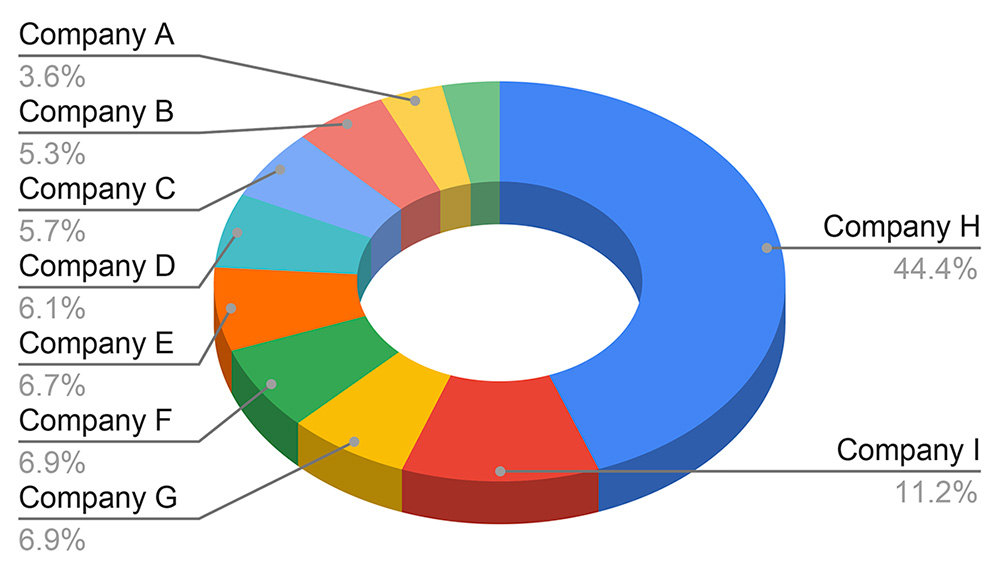
Decisions By Top 10 Insurers
*Sample Chart
Statistical Report fees are based on the complexity of your data request
Learn More & Get a Quote Here >
The Tribunal found:
- The CNR’s from Phillip’s walk-in clinic and family doctor contain few reports of post-accident pain or impairments.
- Although Phillips relies on Raja-Mohamad v. The Personal Insurance Company to argue that his physiotherapy pain reports are enough to justify ongoing treatment, the physiotherapy records themselves show only intermittent treatment. Notably, while a walk-in clinic doctor recommended physiotherapy on December 27, 2021, just a week after the accident, he did not begin such treatment until nearly a year later in November 2022, following his workplace fall.
- The WSIB records reveal after 2 months of physio Phillips reported a 9/10 ability to perform activities at the same level as before the workplace injury. He returned to work on regular duties and hours to his role as a truck driver. He did not return to physio again until March 2024.
- …”While I agree with the applicant that treatment records can be evidence of persistent pain reports, in this case, they have only been provided for a short duration. This, together with the lack of persistent pain reports to the applicant’s family doctor, in my view, does not support a finding of ongoing chronic pain post-accident.”
- The reporting letter dated September 27, 2024 from the Vaughan Pain Clinic to be of limited persuasive value as the assessor did not appear to have reviewed any medical records and relied almost solely on Phillip’s self-reports of ongoing pain and functional limitations with no details on the specific functional limitation.
- Phillips did not provide any rebuttal evidence to the August 25, 2023 IE report of Dr. Bansal who diagnosed Phillips with uncomplicated self-resolving soft tissue injuries to the neck and back as a result of the subject accident.
Need a briefing on recent MIG trends or a case law training session for your team? We can help.
Contact us today or reach out on live chat to set up a tailored session or request a stat report and summary of recent MIG rulings.
inHEALTH Keeps you LAT inFORMED With Access To:
1. LAT Compendium Database – a relational database of LAT and Divisional Court Decisions equipped with multiple search options, Smart Filters, and concise case summaries
2. Notifications: – weekly LAT inFORMER delivered to your inbox Wednesdays; Newly Added Decisions on Fridays and Breaking News as and when it happens
3. Research Support: – inHEALTH’s Live Chat Experts for guided searches and technical inquiries.
Sign up for a 14 day free trial below to experience the service and see how it can help guide your decision making.